
Table of Contents
Beginning
Setting up a fence is definitely hard work and a physically exhausting job. If you are constructing a large fence, the difficulty and thus challenge will be even greater. One of the tools which is thus a real godsend is the post driver that is essentially for quickly and efficiently driving fence posts into the ground. Whether it is a DIY homeowner, a farmer, or a professional contractor, they all are the beneficiaries of post-drivers as they not only ensure the strength and proper alignment of the post but also they will be able to stick to the fence.
Whether a post-driver is considered as an adequate tool for fence posts depends on the type of soil, the post material, the project size, and the budget. The post-driver market offers a variety of models. Right post-driver can drastically lessen labor and at the same time, improve safety and accuracy from a simple handheld to gas-powered and electric capital models. This manual will give you the basics as it will take you through the benefits, drawbacks, comparison, and future trends so that you will be able to make a wise decision.
What Is a Post Driver?
Definition of Post-Driver
A post driver is a solid tool used to forcibly push a fence post down into the ground in order to fix the post firmly. A post-driver may be manual, gas-powered, electric, or hydraulic, and each kind has a different level of strength, speed, and comfort. Nevertheless, the general purpose remains the same – the installation of posts effortlessly.
How a Post-Driver Works?
The working principle of a post-driver is a like for like in all the cases and this mechanism is achieving a repetitive blow or a force downwards onto the top of the post. In a manual model, a user could describe lifting and then dropping the weight onto the post. This process can be done by the user physically, i.e., by sheer muscle power, or by means of some sort of mechanical or combustion energy. There is a huge difference between the first and the latter in the number of blows that a person can achieve, in the force of each blow, and, even, in the general effect the post-driver has on the psyche of the user.
Key Features of a Post Driver
Impact Force and Driving Power
The impact force generated by a post driver is the main element which, on one hand, determines whether the posts can be driven into the ground and, on the other hand, will indicate the types of soil that can be used. With the help of a powerful driving force, not only can the operator do post installations quickly and safely even in those places where the ground is hard and full of stones but also she will spend less time on the working process.
Weight, Balance, and Ease of Use
When a post-driver is well-balanced and of a suitable weight, it is not only easier to handle the device but also the user will spend less energy. In addition, these factors directly affect the accuracy of the operation. Instruments which are not too heavy would be ideally suited for an average homeowner who enjoys doing work on his own, while the heavier or powered ones are for professional applications when the situation calls for a higher driving force.
Compatibility With Different Fence Posts
Various material types of posts like wood, metal, T-post, and U-post can be handled by the post-drivers. Its selection always puts as a priority a post-driver that fits your post type and size because this will guarantee fence alignment, stability, and durability as well as you will have a versatile tool for a variety of applications.
How to Choose the Best Post Driver?
To a large extent, the decision as to which post driver suits you best depends on your fencing requirements, the size of the project, and your working environment. First, list the types of fencing posts you are going to use whether they’re wood, metal, T-posts, or steel as each post method has different limitations of both material and diameter that can be handled. Secondly, focus on the soil type; for a tough, rocky, or heavily compacted soil, a gas or hydraulic post-driver will most likely be needed, whereas for softer soil a manual or an electric model will do just fine. The consideration of the driver’s weight and ease of use is especially crucial when the project is of an extended nature because a well-balanced post-driver will not only help the user to lessen fatigue but will also increase the accuracy of user work. At the same time, anti-vibration handles, safety shields, and secure grips, which are considered the safety features, should always be taken into account to minimize the risk of injury that might arise from the wrong usage of the products. Besides, you might consider making a decision based on the total cost of the post-driver, wear resistance, maintenance and brand loyalty so that your choice of post-driver will be one that has the desired qualities of perfect, efficient, and reliable performance during fence installation with a life-time value as well.
Types of Post Drivers
Manual Post-Driver
Manual post-driver is a very simple and basic hand-operated tool that is able to drive fence posts into the earth solely by using human strength. It is one of the lightest tools available and is very cheap; hence, a very good choice for small DIY tasks or when you are dealing with soft soil. Without a doubt, the manual post-driver is the slowest of all and requires a lot of physical work which is the very opposite of the powered alternative.
Gas-Powered Post-Driver
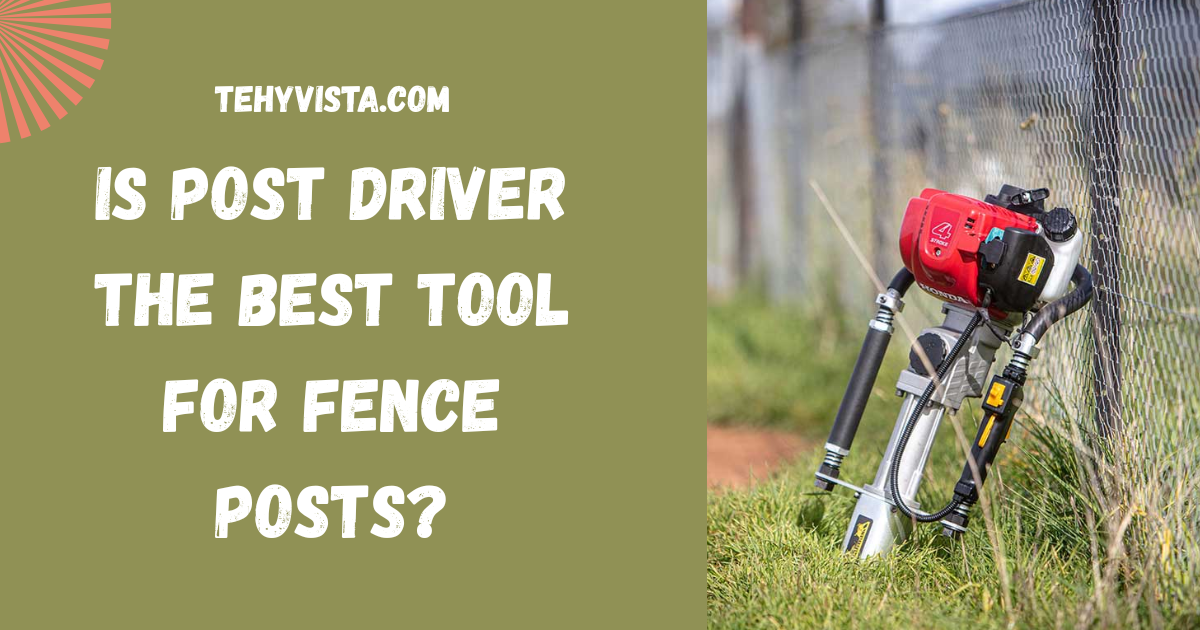
Gas-powered post drivers derive their power from combustion engines and for this reason, they are able to generate a considerable amount of force that makes them not only suitable for penetrating hard soil but also for working with heavy-duty posts. The benefit of these machines is that they are quicker and less energy-consuming than their manual counterparts and that is why they are the best option when it comes to working on extensive areas.
Electric Post-Driver
Electric post-drivers derive their energy from rechargeable batteries or direct power and, therefore, they feature a compromise between ease of use and power. They are the quietest and the easiest-to-use of the gas-powered models which is why they are ideal for use in residential areas. Even though their power is not enough to break through very hard soil, they are perfect for moderate-level tasks and reasonably environmentally-conscious users.
Post Driver vs Other Fence Post Tools
When comparing the post driver vs. other fence post tools, the differences in the performance, amount of work, and total output become quite apparent. In other words, a post-driver works by the impact of the soil vertically downward; therefore, the posts are driven into the ground directly. This makes the tool the perfect choice for metal posts, T-posts, as well as for the places where the ground is of medium compactness. On the contrary, a post hole digger needs the soil to be dug first and then the post has to be backfilled with soil; a post-driver, however, keeps the soil dense and stable which is why the post installation is faster and the post is more stable as well. Such benefits can be seen the most when there is a need for a long fence line where the speed and consistency of the installation, therefore, are paramount. Apart from such hand tools as augers being more appropriate for an extremely large wooden post or for very hard and- hence -undrillable- rocky soil, their downside is they are coming at a higher price, are more heavily dependent on electricity and could be causing a bigger disruption to the surrounding. Also, manual digging tools take much physical energy and time. Besides which, posts have a tendency not to be installed in a perfectly straight line resulting in subsequently a more trouble alignment of the whole fence.
Safety Tips for Using a Post Driver
Personal Protective Equipment Required
One has to put on adequate PPE while driving posts. Especially one’s eyes have to be the utmost protected by goggles since falling debris is most likely to hit human eyes. Gloves do not only make the grip firm but also protect the hands from getting bruised. It is also a must to wear steel-toed boots when working in a work area from
Safe Operating Practices
A post driver can be operated successfully by keeping the correct posture and balance, with the tool firmly controlled, and the working hands and feet being kept far from the post. The post must be well-aligned, the fitting should be stable, and the right dosage of force which is neither too light nor too heavy should be applied so the post does not slip or get bent.
Common Mistakes to Avoid
Don’t commit such mistakes that individuals do such as driving posts at a high speed too much, choosing a wrong post-driver that is not suitable for the soil conditions, or not putting on PPE. Other errors are the wrong positioning of the posts, hitting the ground at an angle and misjudging one’s physical power, which without doubt can cause either harm or breakage of the posts actually.
Pros and Cons of Using a Post Driver
Pros of Post-Driver
Post-driver hand tools have the benefit of faster post installation, stronger post holding, and less physical work compared to hand digging. Besides ensuring that posts are not leaning, they also shorten the stay time of large projects and are suitable for various types of soil. When it comes to electric-powered varieties, the positive aspects that have been mentioned are taken even further in terms of the speed and smoothness of operation.
Cons of Post-Driver
Post drivers, particularly manual ones, may become quite difficult to manage and heavy after a whole day of work. They may also get the keys to difficulties in rocky or very hard soil, while some models, in particular, the gas-powered ones, can be loud and will also require servicing in which case becoming less profitable. They may also be more expensive initially than simple tools.
Future Trends in Post Driver Tools
Various aspects such as technology, durability, and user comfort determine the fate of post-driver tools in the future. Among all these factors, one thing is evident: specialized manufacturers have been moving their focus towards electric and battery-powered post drivers, aimed at lower noise, emissions, and maintenance costs. The new cutting-edge power tools are engineered to be sturdy, powerful, and at the same time, more environmentally friendly and suitable for residential or urban areas. The development of battery life and rapid charging technology allow electric models to be more convenient for long fence installation projects. Besides power innovations, today’s post-drivers still change their face with better ergonomics and thoughtful designs. Workers have found it easier to operate these machines while also getting the most safety from them, thanks to the use of state-of-the-art vibration damping systems, light-weight materials, and adjustable handles. The presence of intelligent sensors for impact regulation and depth uniformity may be the difference in some of the most upmarket brands that will take fence post placement to a higher level of precision.
Post Driver Performance in Different Ground Conditions
Using a Post-Driver in Hard or Compacted Soil
It can be quite exhausting and difficult to drive a post by hand through hard or compacted soil. Gas or hydraulic post-drivers work well under such circumstances as they are able to deliver sufficient power to the post to break the tough soil whilst at the same time helping the operator physically by reducing the effort needed.
Post-Driver Effectiveness in Clay Soil
When clay soil is damp, it is almost like glue and very dense. This may also be the reason why the posts are going slow. A heavy-duty or powered post driver can speed up the work, and even a little moist soil will make it less of a chore. Besides that, the soil will need to be aligned precisely so that posts remain straight after installation.
Can a Post-Driver Work in Wet or Muddy Ground?
Although post-drivers can be operated on wet and muddy ground, their grip and stability might suffer. When work with a post-driver in a damp area cannot be avoided, one should be extra vigilant to ensure that the posts do not get bent or slip. The right driver choice and a solid foundation will guarantee that wet soil is not a problem in achieving an effective outcome.
FAQs About Post Driver
Is a Post-Driver Better Than Digging Holes?
Actually, a post-driver is sometimes a much better pick than the traditional way of digging as it does not displace the soil but simply consolidates it by forcing posts straight into the ground. No wonder then that compared to the whole hole digging and backfilling operation, the post-driver method is a trick that works even faster and cheaper in terms of manpower, which is also quite physically demanding.
Can a Post-Driver Be Used in Rocky Soil?
Basically, a post driver can get through lightly rocky soil but how well it can do this depends on the rock’s size and density. The problem with rocks generally is only when they get bigger, as the consequence of which there will be a post repositioning or pre-drilling to avoid bending or damage to the post while small stones are almost always fine.
What Size Posts Are Suitable for a Post-Driver?
The majority of post-driving tools are capable of only dealing with normal fence post sizes, that is T-posts, U-posts and round or square wooden ones. However, if you want to be confident that a certain post-driver can work on the huge posts, it is your duty to verify the tool’s specs before using it. The bigger the size ranges are, the more driver diameter and strength are needed.
Conclusion
A post driver is an extremely powerful and dependable tool for the quick work of fence posts installation. It perfectly fits the situations when the top-notch quality, high strength, and weather resistance of the post are required. When you use this tool, posts are installed by driving them into the ground without the need to dig deep holes; thus, you get a sturdy fence that can stand the elements and everyday activities. Whether a homeowner is setting a small boundary or a contractor is undertaking a large project, the use of a post-driver will most certainly save a lot of physical effort and installation time and, at the same time, increase the overall accuracy. Still, soil quality, type of post, and financial limits all should be evaluated prior to reaching a choice. Among the disadvantages are the high initial cost of pilots but they are, efficiency, consistency, and durability of the plus points.